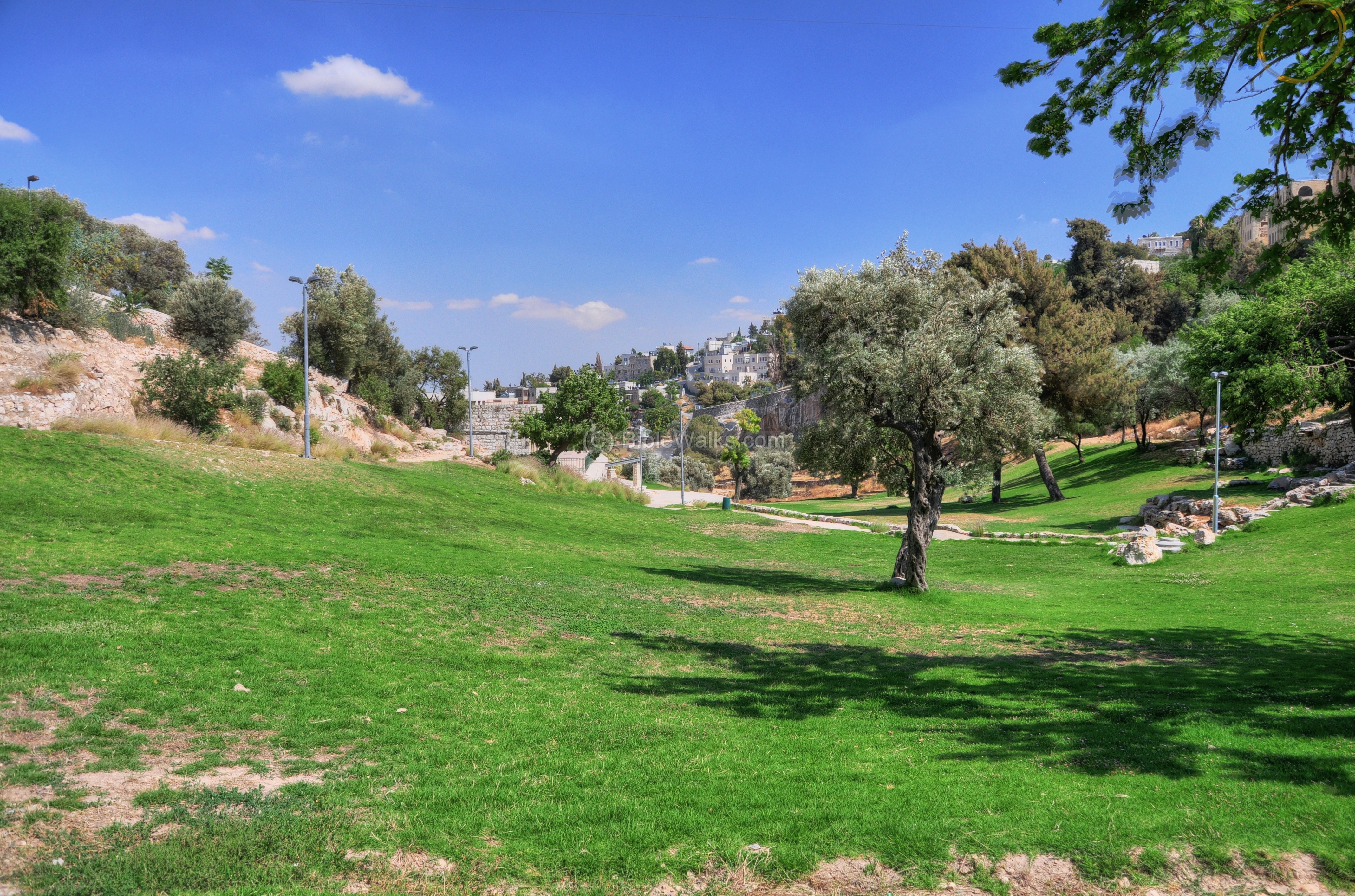
In modern Christianity, Hell as we know it is the all encompassing eternal burning place for all things vile and sinful. Except the problem with this theology is that is doesn’t match scripture. There are several different places that are called hell, and the modern view of a subterranean burning abyss is far less accurate that many are led to believe. So we should probably at this point list a few different places generally regarded as hell. Shahl. Hades. Gehenna. Abaddon. The Abyss. The Burning Lands. The Lake of Fire. After we understand where and when these places are, then we should also look into where the idea of an Evil Lordship of hell originates, perhaps in a later chapter.
Shahl & Hades
Before beginning this section we should speak about a few things concerning the biblical teaching vs. pagan ideas. Shahl is a Hebrew word that, in the bible is never used in the mythical way that the word Hades was in Greek. They are however synonyms for each other between the 2 languages. The problem is this though, should we as students of scripture take the Hebrew or Greek precedence in terms of the mythic definition, and migrate that to the other language when translating into English? From a biblical perspective this shouldn’t be done. The most basic reason is how much Ahih Yhvh hates pagan idols. Just because Greek as a language is heavily influenced by Greek pagan myth does not mean the Greeks got it right.
KJV 1 Chronicles 16:25 to 26 For great is the LORD, and greatly to be praised: he also is to be feared above all gods. For all the gods of the people are idols: but the LORD made the heavens.
KJV Exodus 32:1 to 10 And when the people saw that Moses delayed to come down out of the mount, the people gathered themselves together unto Aaron, and said unto him, Up, make us gods, which shall go before us; for as for this Moses, the man that brought us up out of the land of Egypt, we wot not what is become of him. And Aaron said unto them, Break off the golden earrings, which are in the ears of your wives, of your sons, and of your daughters, and bring them unto me. And all the people brake off the golden earrings which were in their ears, and brought them unto Aaron. And he received them at their hand, and fashioned it with a graving tool, after he had made it a molten calf: and they said, These be thy gods, O Israel, which brought thee up out of the land of Egypt. And when Aaron saw it, he built an altar before it; and Aaron made proclamation, and said, To morrow is a feast to the LORD. And they rose up early on the morrow, and offered burnt offerings, and brought peace offerings; and the people sat down to eat and to drink, and rose up to play. And the LORD said unto Moses, Go, get thee down; for thy people, which thou broughtest out of the land of Egypt, have corrupted themselves: They have turned aside quickly out of the way which I commanded them: they have made them a molten calf, and have worshipped it, and have sacrificed thereunto, and said, These be thy gods, O Israel, which have brought thee up out of the land of Egypt. And the LORD said unto Moses, I have seen this people, and, behold, it is a stiffnecked people: Now therefore let me alone, that my wrath may wax hot against them, and that I may consume them: and I will make of thee a great nation.
KJV 2 Kings 23:20 to 27 (modified) And he slew all the priests of the high places that were there upon the altars, and burned men’s bones upon them, and returned to Jerusalem. And the king commanded all the people, saying, Keep the passover unto the Yhvh your God, as it is written in the book of this covenant. Surely there was not holden such a passover from the days of the judges that judged Israel, nor in all the days of the kings of Israel, nor of the kings of Judah; But in the eighteenth year of king Josiah, wherein this passover was holden to the Yhvh in Jerusalem. Moreover the workers with familiar spirits, and the wizards, and the images, and the idols, and all the abominations that were spied in the land of Judah and in Jerusalem, did Josiah put away, that he might perform the words of the law which were written in the book that Hilkiah the priest found in the house of the Yhvh. And like unto him was there no king before him, that turned to the Yhvh with all his heart, and with all his soul, and with all his might, according to all the law of Moses; neither after him arose there any like him. Notwithstanding the Yhvh turned not from the fierceness of his great wrath, wherewith his anger was kindled against Judah, because of all the provocations that Manasseh had provoked him withal. And the Yhvh said, I will remove Judah also out of my sight, as I have removed Israel, and will cast off this city Jerusalem which I have chosen, and the house of which I said, My name shall be there.
At this point we should reflect on how God not only was angry enough to destroy the entire nation of Israel, but also good things are recorded about King Josiah who among the destruction of many pagan temples, also killed their priests and burned them on their own altars, and yet God was still so angry that he was not appeased by this.
In light of this reflection, we now need to consider how vile toward our God it would be to import from another language or culture the myths surrounding those pagan gods.
Notice how hades is used as a definition for Shahl שׁאל “grave, pit”, yet historically hades comes later, now let’s look at a few verses. Possible religious bias in defining the term, here is why.
Word of Yhvh Job 17:13 to 16
If I wait, the grave is mine house: I have made my bed in the darkness. I have said to corruption, Thou art my father: to the worm, Thou art my mother, and my sister. And where is now my hope? as for my hope, who shall see it? They shall go down to the bars of the pit, when rest together is in the dust.
The word in verse 13 for grave is Shahl, as is the pit in verse 16, an interesting thought to be had here is that in this passage Shahl, is mentioned as the place people return to dust. Shahl is translated both grave and hell, pit, and various others, but in context and connotation really only means grave, or dying place, not a metaphysical alternate reality of hades, this verse shows the association between Shahl and returning to the dust.
KJV Genesis 37:34 to 36 And Jacob rent his clothes, and put sackcloth upon his loins, and mourned for his son many days. And all his sons and all his daughters rose up to comfort him; but he refused to be comforted; and he said, For I will go down into the grave unto my son mourning. Thus his father wept for him. And the Midianites sold him into Egypt unto Potiphar, an officer of Pharaoh’s captain of the guard.
KJV Hebrews 11:8 to 12 By faith Abraham, when he was called to go out into a place which he should after receive for an inheritance, obeyed; and he went out, not knowing whither he went. By faith he sojourned in the land of promise, as in a strange country, dwelling in tabernacles with Isaac and Jacob, the heirs with him of the same promise: For he looked for a city which hath foundations, whose builder and maker is God. Through faith also Sara herself received strength to conceive seed, and was delivered of a child when she was past age, because she judged him faithful who had promised. Therefore sprang there even of one, and him as good as dead, so many as the stars of the sky in multitude, and as the sand which is by the sea shore innumerable.
Jacob is listed in the faith chapter along with David and many other greats of the Old Testament, how then is it these righteous men went to hell? Does it not make more sense that they went unto the dust? A cruel god will burn a righteous man, said even by God to be righteous, Ahih Yhvh is not cruel. Though no man is righteous if not forgiven.
KJV Psalms 31:17 (31:18) Let me not be ashamed, O LORD; for I have called upon thee: let the wicked be ashamed, and let them be silent in the grave.
KJV Psalms 6:5 For in death there is no remembrance of thee: in the grave who shall give thee thanks?
KJV Ecclesiastes 9:10 Whatsoever thy hand findeth to do, do it with thy might; for there is no work, nor device, nor knowledge, nor wisdom, in the grave, whither thou goest.
Incidentally as they say “dead men tell no tales”. Needless to say in Shahl, we return to the dust, are silent, can’t do anything, give no thanks, don’t work, don’t know, have no wisdom. A perfect description of a grave site.
Still we have not covered any verses with this word translated as hell yet. So systematically we should at the very least the few more concerning ones.
KJV Deuteronomy 32:17 to 22 They sacrificed unto devils, not to God; to gods whom they knew not, to new gods that came newly up, whom your fathers feared not. Of the Rock that begat thee thou art unmindful, and hast forgotten God that formed thee. And when the LORD saw it, he abhorred them, because of the provoking of his sons, and of his daughters. And he said, I will hide my face from them, I will see what their end shall be: for they are a very froward generation, children in whom is no faith. They have moved me to jealousy with that which is not God; they have provoked me to anger with their vanities: and I will move them to jealousy with those which are not a people; I will provoke them to anger with a foolish nation. For a fire is kindled in mine anger, and shall burn unto the lowest hell, and shall consume the earth with her increase, and set on fire the foundations of the mountains.
This verse here looks pretty promising for the traditional hell believer, of course people that believe in hell also believe that this place is under the earth also. The problem comes with how other translators translate this passage.
English Standard Version Deuteronomy 32:22 “For a fire is kindled by my anger, and it burns to the depths of Shahl, devours the earth and its increase, and sets on fire the foundations of the mountains.”
1965 Bible in Basic English Deuteronomy 32:22 “For my wrath is a flaming fire, burning to the deep parts of the underworld, burning up the earth with her increase, and firing the deep roots of the mountains.”
Revised Version Deuteronomy 32:22 “For a fire is kindled in mine anger, And burneth unto the lowest pit, And devoureth the earth with her increase, And setteth on fire the foundations of the mountains.”
Jewish Publication Society Bible Deuteronomy 32:22 “For a fire is kindled in My nostril, and burneth unto the depths of the nether-world, and devoureth the earth with her produce, and setteth ablaze the foundations of the mountains.”
The difference might not seem that great on face value, but the fact that the translators don’t all agree that this verse should be translated as hell stands out. It’s a known fact that the depths of the earth are hot along fault lines, where mountain ranges usually are, and that there is plenty of lava under volcanoes. It’s also a known fact that when people die we bury them. So the question is if this Shahl place is “hell”, then it isn’t a metaphysical spiritual realm, but somewhere that we as living mortals can find, because we already have. With this we establish the approximate bounds of the area of Shahl. It extends from the shallowest pit dug in the ground to bury a man, all the way down into the deep burning depths of the earth. It therefore just like the earth we stand on can be spelunked, mined, drilled, dug up, and any other activity we could do in the earth could be done in Shahl. Except Shahl is only used in the Hebrew for earth that people have been buried in.
To recap what we have learned so far, in Shahl, there is no work, device, wisdom, knowledge, thanks, noise, there bodies rot or corrupt, and there are worms. The question is does this match the torture hell of tradition? The one with screams and agony of condemnation? No, because first of all the word is chshbwn חשׁבון, meaning either reasoning as in thought, or contrivance as in an object or invention made for a purpose. Either definition leads to a logic dead end for the traditional view of hell, because it’s hard to torture without torture devices, and it is hard be tortured if you have no intellect. So it’s pretty obvious that trying to apply the traditional view of hell to Shahl is broken. However to apply the normal view of the grave to Shahl fits perfectly, especially the view of a grave with no afterlife, unless resurrected.
Now we ought to consider, the Septuagint, the translation of the Old Testament in Greek, is not in the original language, it is valuable as a comparison reference to the Greek from the Hebrew language, but it is in an older dialect than New Testament Greek. The words Shahl and hades appear in 57 different verses translated as the same word. There are of course a few places that Shahl is not translated hades in the Septuagint, and places that other words are translated as hades into the Greek.
These are the verses where Shahl is translated as hades into the Greek.
Genesis 37:35, 42:38, 44:29, 44:31, Numbers 16:30, 16:33; 1 Samuel 2:6; 1 Kings 2:6, 2:9, Job 7:9, 11:8, 14:13, 17:13, 17:16, 21:13, 26:6, Psalms 6:5, 9:17, 16:10, 18:5, 30:3, 31:17, 49:14, 49:15, 55:15, 86:13, 88:3, 89:48, 139:8, 141:7, Proverbs 1:12, 5:5, 7:27, 9:18, 15:11, 15:24, 27:20, 30:16, Ecclessiastes 9:10; Song of Solomon 8:6, Isaiah 5:14, 14:9, 14:11, 14:15, 28:15, 28:18, 38:10, 38:18, 57:9; Ezekiel 31:15, 31:16, 31:17, 32:27, Hosea 13:14; Amos 9:2; Jonah 2:2; Habbakuk 2:5
These are the verses that Shahl is translated into the Greek as a word other than hades.
Deuteronomy 32:22, 2 Samuel 22:6, Job 24:19, Psalms 116:3, Proverbs 23:14, Ezekiel 32:21
Last, these are the words where another word in the Hebrew is translated as hades.
Job 33:22, Job 38:17, Psalms 94:17, 115:17, Proverbs 2:18, 14:12, 16:25, Isaiah 14:19
First it should be noted that the first group of verses is plenty to establish that Shahl and hades are synonyms for each other in their respective languages. Very little examination is required for that group of verses. Let us then examine the passages where Shahl is not translated to hades in the Greek but as something else. In Deuteronomy 32:22 Shahl is translated as αδου, which seems to be a spelling error, has no Strong’s numbers, and in other lexicons which list a definition for this word, the definition does not match the context of the Hebrew or English. In 2 Samuel 22:6, Psalms 116:3, Proverbs 23:14 the word Shahl is translated in the LXX (Septuagint) as θανατου qanatou and means death. In Job 24:19 the Greek text of the passage in the Septuagint does not even roughly match the Hebrew, but rather is rephrased in the Greek. The Hebrew language does not support the Greek translation, however this may or may not have had reference to some colloquial saying in the Greek with a similar meaning.
Word of Yhvh Job 24:19
ציה גם חם יגזלו מימי שׁלג שׁאול חטאו
Septuagint Job 24:19 αναφανειη δε τα φυτα αυτων επι γης ξηρα αγκαλιδα γαρ ορφανων ηρπασαν
In Ezekiel 32:21 the word swapped for Shahl is κοιμηθητι koimhqhti “a slave of sleep, or death”. This just goes to show the words considered synonyms at least from Hebrew to Greek all are associated with death, rather than a burning hell.
Now lets check what other Hebrew words are associated with the word hades to see what associated definitions were associated with hades. Job 33:22 is interesting, mostly because it shows what often Strong’s concordance does to words spelled exactly the same. In this verse hades is recorded as shachath in the Hebrew, pretranslation, Strong’s lists this as H7485, but the 2 previous listings in Strong’s have identical spellings and diacritics.
Strong’s Exhaustive Concordance E-sword version.
“H7845 שׁחת shachath shakh’-ath
From H7743; a pit (especially as a trap); figuratively destruction: – corruption, destruction, ditch, grave, pit.”
“H7844 שׁחת shechath shekh-ath’
(Chaldee); corresponding to H7843: – corrupt, fault.”
“H7843 שׁחת shâchath shaw-khath’
A primitive root; to decay, that is, (causatively) ruin (literally or figuratively): – batter, cast off, corrupt (-er, thing), destroy (-er, -uction), lose, mar, perish, spill, spoiler, X utterly, waste (-r).”
See how the Hebrew letters are identical? Now look at the definitions, they are pretty much the same. This is pretty odd, this is the same word in the Hebrew language. Strong’s concordance does this frequently, labeling Hebrew words as Aramaic or Chaldee. In fact the older book version, publishing date not printed, does not contain any reference to Aramaic in the definitions, this was added later. The words in the Old Testament are all part of the Hebrew language, or transliterations of names.
In Job 38:17, Proverbs 2:18, Proverbs 14:12, and Proverbs 16:25 the word movts מות, meaning death, is translated as θανατου, θανατω, αδου notice a trend here in the definitions yet?
In Psalms 94:17 Tanach, or Septuagint 93:17, the Hebrew phrase, שׁכנה דומה נפשׁי ,“shkon domh npshe” or “inhabit silence of life, is interpreted as “…παρωκησεν τω αδη η ψυχη μου” which means ”dwell in hades the life mine”.
While the imagery of the Septuagint translation seems to support a more typical approach to hell, notice that in actuality the passage connects hades with a word for silence, or lack of speech as being synonyms. To state the obvious dead people are silent. The popular scene of hell however is filled with the screams of the damned, it is wrong.
Word of Yhvh Psalms 115:17
לא המתים יהללו יה ולא כל ירדי דומה
In Isaiah 14:19 the word מקברך mxbrch is translated to hades in the Greek, this word means “from your sepulcher”.
Now let’s review what has been covered up to this point. Shahl the Old Testament word for dirt people have been buried in, was translated as hades many times in the Greek language. The words for death, sepulcher, silence, and rotting corruption have also been translated as hades. What this means is obvious. To the Jews that made the Septuagint translation the word hades to them mean, dirt people were buried in, a place bodies rotted while silently dead. In other words, a common grave. It is this view that must be carried forward when understanding the New Testament Greek also. Having said this let us look to see if the New Testament provides the same understanding.
There are only 11 verses in the New Testament using the word hades. They are Matthew 11:23, 16:18, Luke 10:15, 16:23, Acts 2:27, 31, 1 Corinthians 15:55, Revelation 1:18, 6:8, 20:13, 20:14.
KJV Matthew 11:23 And thou, Capernaum, which art exalted unto heaven, shalt be brought down to hell: for if the mighty works, which have been done in thee, had been done in Sodom, it would have remained until this day.
KJV Luke 10:13 to 15 Woe unto thee, Chorazin! woe unto thee, Bethsaida! for if the mighty works had been done in Tyre and Sidon, which have been done in you, they had a great while ago repented, sitting in sackcloth and ashes. But it shall be more tolerable for Tyre and Sidon at the judgment, than for you. And thou, Capernaum, which art exalted to heaven, shalt be thrust down to hell.
These verses can only have 1 meaning. The reason for this is that Capernaum has been archeologically excavated in Israel, much of the ancient city has been dug up and partially unburied. In other words they have found Capernaum buried in the ground like a common corpse. There have been ideas forwarded like “maybe this passage is talking about the people of the city”, well the bible names the city, not the people of it.
The next passage might not be to clear unless taken with the previous information, but with this established it’s quite clear.
KJV Acts 2:25 to 31 For David speaketh concerning him, I foresaw the Lord always before my face, for he is on my right hand, that I should not be moved: Therefore did my heart rejoice, and my tongue was glad; moreover also my flesh shall rest in hope: Because thou wilt not leave my soul in hell, neither wilt thou suffer thine Holy One to see corruption. Thou hast made known to me the ways of life; thou shalt make me full of joy with thy countenance. Men and brethren, let me freely speak unto you of the patriarch David, that he is both dead and buried, and his sepulchre is with us unto this day. Therefore being a prophet, and knowing that God had sworn with an oath to him, that of the fruit of his loins, according to the flesh, he would raise up Christ to sit on his throne; He seeing this before spake of the resurrection of Christ, that his soul was not left in hell, neither his flesh did see corruption.
We all know Jesus was dead for 3 days before his resurrection, and we all know 3 days isn’t enough time for a body to rot, or “corrupt”. The next passage also backs this up and is in the same chapter we find another reference to hades. This reference is translated in English as grave in vs 55. Now consider in this chapter what the great or last enemy is. It is not hell, it’s not satan, it is death. We know what death is. In this chapter in the New Testament death is in poetic form shown to be a synonym for hades. When we compare this with the verses in acts, it becomes clear that what Jesus was sent to the earth to fight was death, which was overcome when he was resurrected.
KJV 1 Corinthians 15:3 to 4, 23 to26, 50 to 58 For I delivered unto you first of all that which I also received, how that Christ died for our sins according to the scriptures; And that he was buried, and that he rose again the third day according to the scriptures:……But every man in his own order: Christ the firstfruits; afterward they that are Christ’s at his coming. Then cometh the end, when he shall have delivered up the kingdom to God, even the Father; when he shall have put down all rule and all authority and power. For he must reign, till he hath put all enemies under his feet. The last enemy that shall be destroyed is death……Now this I say, brethren, that flesh and blood cannot inherit the kingdom of God; neither doth corruption inherit incorruption. Behold, I shew you a mystery; We shall not all sleep, but we shall all be changed, In a moment, in the twinkling of an eye, at the last trump: for the trumpet shall sound, and the dead shall be raised incorruptible, and we shall be changed. For this corruptible must put on incorruption, and this mortal must put on immortality. So when this corruptible shall have put on incorruption, and this mortal shall have put on immortality, then shall be brought to pass the saying that is written, Death is swallowed up in victory. O death, where is thy sting? O grave, where is thy victory? The sting of death is sin; and the strength of sin is the law. But thanks be to God, which giveth us the victory through our Lord Jesus Christ. Therefore, my beloved brethren, be ye stedfast, unmoveable, always abounding in the work of the Lord, forasmuch as ye know that your labour is not in vain in the Lord.
This next verses will be explained in a set because they all have a common phrase “death and hell” and all occur in the same book of the bible.
KJV Revelation 1:17 to 18 And when I saw him, I fell at his feet as dead. And he laid his right hand upon me, saying unto me, Fear not; I am the first and the last: I am he that liveth, and was dead; and, behold, I am alive for evermore, Amen; and have the keys of hell and of death.
KJV Revelation 6:7 to 8 And when he had opened the fourth seal, I heard the voice of the fourth beast say, Come and see. And I looked, and behold a pale horse: and his name that sat on him was Death, and Hell followed with him. And power was given unto them over the fourth part of the earth, to kill with sword, and with hunger, and with death, and with the beasts of the earth.
KJV Revelation 20:12 to 15 And I saw the dead, small and great, stand before God; and the books were opened: and another book was opened, which is the book of life: and the dead were judged out of those things which were written in the books, according to their works. And the sea gave up the dead which were in it; and death and hell delivered up the dead which were in them: and they were judged every man according to their works. And death and hell were cast into the lake of fire. This is the second death. And whosoever was not found written in the book of life was cast into the lake of fire.
Now in those verses death and hell come as a pair and in context of all of these verses hades is equal to death, and as in the case of the horseman has the power of death, and that is not all. Therefore hades is the power of death, at least according to the book of Revelation. Revelation 20 is obviously about physical body resurrection, and it wouldn’t make much sense for the already judged and damned (at least according to the common view of hell) to come back out of hell for a second round of judging and damning.
This leaves 2 verses.
KJV Matthew 16:18 And I say also unto thee, That thou art Peter, and upon this rock I will build my church; and the gates of hell shall not prevail against it.
This verse reads perfectly fine if the word grave is used in place of hell, especially given the references to physical body resurrection, and the graves victory we just read.
This last verse is the only verse that doesn’t match this trend in both the Old and New Testament. However there is good cause for this.
KJV Luke 16:22 to 24 And it came to pass, that the beggar died, and was carried by the angels into Abraham’s bosom: the rich man also died, and was buried; And in hell he lift up his eyes, being in torments, and seeth Abraham afar off, and Lazarus in his bosom. And he cried and said, Father Abraham, have mercy on me, and send Lazarus, that he may dip the tip of his finger in water, and cool my tongue; for I am tormented in this flame.
This passage should be easily remembered by any bible student. It is most often the verse that is immediately turn to as proof of the common view of the burning hell, and with good reason. The problem is that what is often not focused upon in this passage is a) it’s a parable, so it’s not literal b) this is clearly speaking about the Judgment considering that please read the following section on Gehenna, c) the parable does not specify a date, so it would not be wise to make assumptions on this unless and until more information is provided.
Gehenna, is the real, Ben Hinnom!
Gehenna is one of the more popular names for hell. It is also most commonly translated in the New Testament as hell in the phrase “cast into hell fire”. One thing is for sure because of the many historical texts, and modern archeology we know exactly where Gehenna is located.
This link provided above is the Valley of Hinnom with a road named after it, and is the location of Gehenna spoken about in the bible. The name in the Greek is γεενναν geennan, and in hebrew גי בן הנם gi bn hnm, valley of the son of Hinnom. This is a literal place outside of Jerusalem, was commonly used as place of pagan worship during God’s 1st temple era. This valley is also called Tophet, and was used as a burning and burial place of men and children. This also happens to be the primary place of worship in the Judean area for worshipers of Molech, and one of many places for worship of Baal, the following verses relate to this place. Archeological evidence for burning in this area is lacking, likely due to the defilement of the place by King Josiah who was very thorough in removing and destroying much of the false god worship near Jerusalem:
KJV 2 Kings 23:10, 19, 25 And he defiled Topheth, which is in the valley of the children of Hinnom, that no man might make his son or his daughter to pass through the fire to Molech…..And all the houses also of the high places that were in the cities of Samaria, which the kings of Israel had made to provoke the LORD to anger, Josiah took away, and did to them according to all the acts that he had done in Bethel…..And like unto him was there no king before him, that turned to the LORD with all his heart, and with all his soul, and with all his might, according to all the law of Moses; neither after him arose there any like him.
Among the acts that King Josiah did, were the burning of the bones in the graves, the slaughter and burning of false priests on their altars, and the grinding of the images of their gods into powder. The bible doesn’t specifically state that he did all these things in relation to Gehenna, but given the other circumstances and the vile nature of Molech worship it is very possible that this is what happened to the evidence of Molech worship in the Valley of Hinnom, aka Gehenna. This of course would have been the evidence left after the time of King Ahaz. The following translation of the passage exposes some of the imagery of the area at that time.
KJV 2 Chronicles 28:1 to 5 Ahaz was twenty years old when he began to reign, and he reigned sixteen years in Jerusalem: but he did not that which was right in the sight of the LORD, like David his father: For he walked in the ways of the kings of Israel, and made also molten images for Baalim. Moreover he burnt incense in the valley of the son of Hinnom, and burnt his children in the fire, after the abominations of the heathen whom the LORD had cast out before the children of Israel. He sacrificed also and burnt incense in the high places, and on the hills, and under every green tree. Wherefore the LORD his God delivered him into the hand of the king of Syria; and they smote him, and carried away a great multitude of them captives, and brought them to Damascus. And he was also delivered into the hand of the king of Israel, who smote him with a great slaughter.
The imagery in this verse of Gehenna of the old days is very different from the ones most popularly taught in Christendom at large. The image portrayed by most Christians is one of a continuously burning pit of garbage where dead bodies were thrown, this compared to the available references in scripture does not match, and noticeably neither does the ever burning hellfire view. What is portrayed in scripture is a normal ordinary valley, surrounded by trees with a haze of smoke from burning flesh obscuring the landscape of verdant greenery. The wrongness of the Molech worship is all that much more vivid from the contrast, the sense of wrongness amplified. This very limited amount of information is all we have on ancient Gehenna other than archeological evidence of aqueducts from either the time of King Solomon or Roman era, and various building structures located in the area. The picture painted by both the bible and archeology do match very well. The ever burning garbage pit does not, and the origin of this thought has been blamed on jews, by christians even though the bad information was predominantly spread by christians.The garbage dump theory as a very convincing myth that has no historical basis that was by and large spread by a mob of people who thought this sounded reasonable without having visited or studied the actual site in person.
In these modern times Gehenna has been made into a public park for recreational use. It may or may not have been as green as the park in those ancient times. In 01/funny-it-doesnt-look-like-mountain-or.html?m=“the 1920’s the place was far more arid, and a dam was visible above ground, at that time there was a pool of water near the base of the dam called “Breichat HaSultan” or The Sultan’s Pool which no longer exists today.
The prophecies in the old testament concerning Gehenna have to have been fulfilled during one of the times of exile, given the information available in chapter 19 verse 8, and chapter 32 verse 36 this would not be possible in our current time given the prophecies concerning the return of Jesus. Archeological evidence for mass graves has not been found in the area, though many tombs have been located in the area. This may or may not be due to the fact that the valley floor at some point has had fill dirt added to the height of previously above ground aqueducts.
Jeremiah 7:30 to 8:3 For the children of Judah have done evil in my sight, saith the LORD: they have set their abominations in the house which is called by my name, to pollute it. And they have built the high places of Tophet, which is in the valley of the son of Hinnom, to burn their sons and their daughters in the fire; which I commanded them not, neither came it into my heart. Therefore, behold, the days come, saith the LORD, that it shall no more be called Tophet, nor the valley of the son of Hinnom, but the valley of slaughter: for they shall bury in Tophet, till there be no place. And the carcases of this people shall be meat for the fowls of the heaven, and for the beasts of the earth; and none shall fray them away. Then will I cause to cease from the cities of Judah, and from the streets of Jerusalem, the voice of mirth, and the voice of gladness, the voice of the bridegroom, and the voice of the bride: for the land shall be desolate. At that time, saith the LORD, they shall bring out the bones of the kings of Judah, and the bones of his princes, and the bones of the priests, and the bones of the prophets, and the bones of the inhabitants of Jerusalem, out of their graves: And they shall spread them before the sun, and the moon, and all the host of heaven, whom they have loved, and whom they have served, and after whom they have walked, and whom they have sought, and whom they have worshipped: they shall not be gathered, nor be buried; they shall be for dung upon the face of the earth. And death shall be chosen rather than life by all the residue of them that remain of this evil family, which remain in all the places whither I have driven them, saith the LORD of hosts.
Jeremiah 19:2 to 8 And go forth unto the valley of the son of Hinnom, which is by the entry of the east gate, and proclaim there the words that I shall tell thee, And say, Hear ye the word of the LORD, O kings of Judah, and inhabitants of Jerusalem; Thus saith the LORD of hosts, the God of Israel; Behold, I will bring evil upon this place, the which whosoever heareth, his ears shall tingle. Because they have forsaken me, and have estranged this place, and have burned incense in it unto other gods, whom neither they nor their fathers have known, nor the kings of Judah, and have filled this place with the blood of innocents; They have built also the high places of Baal, to burn their sons with fire for burnt offerings unto Baal, which I commanded not, nor spake it, neither came it into my mind: Therefore, behold, the days come, saith the LORD, that this place shall no more be called Tophet, nor The valley of the son of Hinnom, but The valley of slaughter. And I will make void the counsel of Judah and Jerusalem in this place; and I will cause them to fall by the sword before their enemies, and by the hands of them that seek their lives: and their carcases will I give to be meat for the fowls of the heaven, and for the beasts of the earth. And I will make this city desolate, and an hissing; every one that passeth thereby shall be astonished and hiss because of all the plagues thereof.
Jeremiah 32:32 to 36 Because of all the evil of the children of Israel and of the children of Judah, which they have done to provoke me to anger, they, their kings, their princes, their priests, and their prophets, and the men of Judah, and the inhabitants of Jerusalem. And they have turned unto me the back, and not the face: though I taught them, rising up early and teaching them, yet they have not hearkened to receive instruction. But they set their abominations in the house, which is called by my name, to defile it. And they built the high places of Baal, which are in the valley of the son of Hinnom, to cause their sons and their daughters to pass through the fire unto Molech; which I commanded them not, neither came it into my mind, that they should do this abomination, to cause Judah to sin. And now therefore thus saith the LORD, the God of Israel, concerning this city, whereof ye say, It shall be delivered into the hand of the king of Babylon by the sword, and by the famine, and by the pestilence;
At Jesus’ return even though 2/3 of Israel is cut off the city is not going to become desolate. In history this has happened twice, once during the Babylonian exile, and another during Ad 70, the Roman exile. Out of the two exiles the Roman one was far more brutal and total in its desolation, on the other hand the Babylonians sacked Jerusalem not once but twice. The bible however does not specifically record the prophecies spoken about concerning Gehenna as having been fulfilled at that time, so as believers this leaves us with a bit of a cliff hanger. This lack of sure fulfillment cannot extend to this time we live in, the reason for this is that the King of Babylon plays no role in the Last Days, his time was during the head of gold era of Nebuchadnezzar’s Image. One sure thing is that the King of Babylon is specifically mentioned be prophesied to do this in one of the passages, and nothing is mentioned at all about the Romans. Therefore the probability of the prophecy in Jeremiah being fulfilled is very high.
Now let’s review the information we have obtained from the Old Testament. What is findable and provable is that Gehenna is a valley south of Jerusalem, where the Jews of old practiced idol worship burning children alive. This area has trees surrounding it, and archeologically in times past may have had pools of water there. The land itself may or may not have been very green with lots of vegetation, perhaps having good years and bad years like any other place. The bible record does not record any major slaughters in this area for it to have permanently gained the name Valley of Slaughter, and no major mass graves have been discovered so far in the area. The area was cleansed of evidence of idol worship by King Josiah, who was very zealous in doing so and no evidence whatsoever of Moloch worship can be found. Today a very green park has been setup in the area, and currently and in the past there has not been an everlasting fire pit burning there, but rather in old times and intermittent child burning fire, and perhaps a field of carcasses rotting on top of the earth after major battles, with no fire, and a variety of animals feeding off of them. This while quite the tragic scene is polar opposite of the ever burning view often held.
All of this is obtainable measurable fact either via Old Testament scripture or archeology. Now, the past evidence ought to be taken into account, when trying to understand what was said in the Gospel writings.
KJV Matthew 5:21 to 22 Ye have heard that it was said by them of old time, Thou shalt not kill; and whosoever shall kill shall be in danger of the judgment: But I say unto you, That whosoever is angry with his brother without a cause shall be in danger of the judgment: and whosoever shall say to his brother, Raca, shall be in danger of the council: but whosoever shall say, Thou fool, shall be in danger of hell fire.
This passage has little relevance to the subject at hand, except to show what would cause one to experience hell fire.
KJV Matthew 5:27 to 30 Ye have heard that it was said by them of old time, Thou shalt not commit adultery: But I say unto you, That whosoever looketh on a woman to lust after her hath committed adultery with her already in his heart. And if thy right eye offend thee, pluck it out, and cast it from thee: for it is profitable for thee that one of thy members should perish, and not that thy whole body should be cast into hell. And if thy right hand offend thee, cut it off, and cast it from thee: for it is profitable for thee that one of thy members should perish, and not that thy whole body should be cast into hell.
What we find here in Matthew 5:29 is that Gehenna is used in reference to complete destruction, until nothing is left. In historical context we can also include the idea that this is to be until the evidence of existence is completely gone, as none has been found of the dead molech worshipper babies, and their pagan practices in the area. This is at odds with the everlasting torment idea, because evidence of existence would have to be left in order for a being to be tormented for eternity. The last point is this verse is speaking of the “whole body” of a person and reflects the immolation of whole bodies as had been done in this place in the past. This verse does not tell us whether the whole body goes into Gehenna alive or dead. If the whole body were to be thrown into Gehenna alive due to the way this passage reads then their existence is completely wiped out, if done dead then only a minor argument for an immortal soul could be argued.
KJV Matthew 10:27 to 31 What I tell you in darkness, that speak ye in light: and what ye hear in the ear, that preach ye upon the housetops. And fear not them which kill the body, but are not able to kill the soul: but rather fear him which is able to destroy both soul and body in hell. Are not two sparrows sold for a farthing? and one of them shall not fall on the ground without your Father. But the very hairs of your head are all numbered. Fear ye not therefore, ye are of more value than many sparrows.
The point here is that both soul and body are destroyed in Gehenna, therefore there is no such thing as an immortal soul, only mortal souls can exist because only mortals can die or be destroyed. Also this destruction is future tense, because there is currently no burning fire in Gehenna.
Matthew 18:1 to 10 At the same time came the disciples unto Jesus, saying, Who is the greatest in the kingdom of heaven? And Jesus called a little child unto him, and set him in the midst of them, And said, Verily I say unto you, Except ye be converted, and become as little children, ye shall not enter into the kingdom of heaven. Whosoever therefore shall humble himself as this little child, the same is greatest in the kingdom of heaven. And whoso shall receive one such little child in my name receiveth me. But whoso shall offend one of these little ones which believe in me, it were better for him that a millstone were hanged about his neck, and that he were drowned in the depth of the sea. Woe unto the world because of offences! for it must needs be that offences come; but woe to that man by whom the offence cometh! Wherefore if thy hand or thy foot offend thee, cut them off, and cast them from thee: it is better for thee to enter into life halt or maimed, rather than having two hands or two feet to be cast into everlasting fire. And if thine eye offend thee, pluck it out, and cast it from thee: it is better for thee to enter into life with one eye, rather than having two eyes to be cast into hell fire. Take heed that ye despise not one of these little ones; for I say unto you, That in heaven their angels do always behold the face of my Father which is in heaven.
The correlation in this passage connects the everlasting fire with Gehenna fire. Reading this passage as is in the English might be little misleading, and also for practical purposes the average concordance gives a less than adequate translation of the word used for everlasting in the Greek language. The word there is αιωνιον.
Αιωνιον for the age, span of the age. Root word aion with adjective time referent modifier.
On face value one would think this is an acceptable definition, but it is not, the word there is not the same as listed in strong’s which is fairly common due to Greek language structure. The problem comes with what the root word definition, and the grammatical structure of the word.
Αιων age. Defined as eternal, or eternity, or forever by other authors, but most properly used to define the set age of mankind.
The root word means “age” and in the bible usually refers to a set period of time that may or may not refer to a 1000 year Day as is thought of in the 7000 year plan of God. Given that this refers to the Judgment the probability is high that it does reflect a 1000 year time period, beginning with the Judgment at Jesus’ return and ending some time after the 2nd Judgment after God’s return. There are a couple of issues people could have with this thought. One is with the last 3 letters of the word, these letters are for the Greek grammar, and can indicate a singular noun or adverb depending on usage. The important part for us is the singular nature of the word, this does not represent many ages, but 1 age or time frame. This opinion is also offered by a few others. The LSJ Lexicon and Middle Lindell both offer a definition of “lasting for an age” this of course is the most literal definition of the word, and in this case the most accurate to use. The second issue that might arise from this thought is that whenever used in conjunction with Life the word is usually understood as eternal or eternity. For example:
KJV Romans 2:5 to 9(modified) But after thy hardness and impenitent heart treasurest up unto thyself wrath against the day of wrath and revelation of the righteous judgment of God; Who will render to every man according to his deeds: To them who by patient continuance in well doing seek for glory and honour and αφθαρσιαν, eternal (αιωνιον) life: But unto them that are contentious, and do not obey the truth, but obey unrighteousness, indignation and wrath, Tribulation and anguish, upon every soul of man that doeth evil, of the Jew first, and also of the Gentile;
Αφθαρσιαν perpetuity as a name with adjective time referent modifier.
Notice the difference the unending existence is in this list separate from Aionion Life or Life of the Age, this means while part of what we are promised is unending life, Life of the Age is different. After all we can only rule over other men so long as the millennial reign continues, after this God will be all in all and we will all be immortal and Christ like, and might not need government structure.
It goes without saying the archeological evidence of Sodom and Gomorrha and the cities in the valleys around them have been found. Today they are not burning even though of course they also were condemned to “eternal fire”. What this shows is that once the fire has run it’s natural course, it burns out. After all the burnt remains of these cities have been found.
KJV Mark 9:42 to 50 And whosoever shall offend one of these little ones that believe in me, it is better for him that a millstone were hanged about his neck, and he were cast into the sea. And if thy hand offend thee, cut it off: it is better for thee to enter into life maimed, than having two hands to go into hell, into the fire that never shall be quenched: Where their worm dieth not, and the fire is not quenched. And if thy foot offend thee, cut it off: it is better for thee to enter halt into life, than having two feet to be cast into hell, into the fire that never shall be quenched: Where their worm dieth not, and the fire is not quenched. And if thine eye offend thee, pluck it out: it is better for thee to enter into the kingdom of God with one eye, than having two eyes to be cast into hell fire: Where their worm dieth not, and the fire is not quenched. For every one shall be salted with fire, and every sacrifice shall be salted with salt. Salt is good: but if the salt have lost his saltness, wherewith will ye season it? Have salt in yourselves, and have peace one with another.
There are 2 concerning questions in this passage, unquenchable fire, worms that don’t die. Looking at the Greek that is exactly what is said, there is no reason to add to that or take away from it. Remember though from previous context that this is “The Fire of The Age” the one that lasts between the 2 Judgments and for and unknown time after the last Judgment. There is some oddity is the phrase “never shall be quenched” this is actually 2 Greek words in the actual text. The word ου, meaning not or no, and the word σβεννυται meaning quenched.
Now here is a thought to think about. In order to extinguish a fire something must be done to the fire, add dirt, water, some sort of chemical suppressant etc. If you discontinue feeding the fire and it burns out, it has not been extinguished. It has just burned out. In order to extinguish or quench a fire action must be taken to stop the fire. Secondly the worms that never die, σκωληξ, and most likely specifically referring to the maggot in this case, and means word, maggot, or grub. Scientifically it is well know that maggots become flies, and at that point leave a corpse, this is a indisputable fact. So in light of known facts what it must mean for a worm to die not is that all of the flesh on the corpse will be completely devoured by the words until only the bones are left.
As and interesting side note, and as a modern anecdote, there is a fly called the Black Soldier Fly. It develops very quickly, and goes from maggot to fly in two weeks, and will consume any softer vegetable matter or flesh, fresh or not. It is capable of devouring a corpse to bone very fast. There is at this time is 2023 a funeral home in Ben Hinnom, using these creatures to return corpses to dirt and cremate bone to ash. At last check it was about 3 weeks corpse to dirt.
The last thought to consider here is the comparison of first and last between the worms and fire. Notice how the worms come first? In other words the body putrefies, rots, and decays, the natural course of rotting happening until only bones are left. Then the bones are burned until no evidence of that person remaining exists. Sound familiar? This is exactly what King Josiah did during his reign to all the pagan worship places in his day, he completely wiped out all evidence of them ever having existed, this is the fate of those that fail our master.
If we compare this to what is written in the book of Amos, what we will find is that the reason that Gehenna will be called the Valley of Slaughter is because of the way that people that are condemned die at the Judgment. That would be by the Sword, so with this we find that the cause of death is not fire, but actual slaughter.
KJV Amos 9:8 to 12 Behold, the eyes of the Lord GOD are upon the sinful kingdom, and I will destroy it from off the face of the earth; saving that I will not utterly destroy the house of Jacob, saith the LORD. For, lo, I will command, and I will sift the house of Israel among all nations, like as corn is sifted in a sieve, yet shall not the least grain fall upon the earth. All the sinners of my people shall die by the sword, which say, The evil shall not overtake nor prevent us. In that day will I raise up the tabernacle of David that is fallen, and close up the breaches thereof; and I will raise up his ruins, and I will build it as in the days of old: That they may possess the remnant of Edom, and of all the heathen, which are called by my name, saith the LORD that doeth this.
KJV Luke 12:4 to 5 And I say unto you my friends, Be not afraid of them that kill the body, and after that have no more that they can do. But I will forewarn you whom ye shall fear: Fear him, which after he hath killed hath power to cast into hell; yea, I say unto you, Fear him.
In other words fear the one that can wipe you out of existence. God.
KJV Matthew 23:15 Woe unto you, scribes and Pharisees, hypocrites! for ye compass sea and land to make one proselyte, and when he is made, ye make him twofold more the child of hell than yourselves.
KJV Matthew 23:33 to 36 Ye serpents, ye generation of vipers, how can ye escape the damnation of hell? Wherefore, behold, I send unto you prophets, and wise men, and scribes: and some of them ye shall kill and crucify; and some of them shall ye scourge in your synagogues, and persecute them from city to city: That upon you may come all the righteous blood shed upon the earth, from the blood of righteous Abel unto the blood of Zacharias son of Barachias, whom ye slew between the temple and the altar. Verily I say unto you, All these things shall come upon this generation.
The word here damnation in verse 33 is usually translated as judgement. During the Roman siege at Jerusalem after the time of Jesus around A.D. 70, a number of things happened 1) people ate each other and their children to stay alive, 2) so many people died they were thrown over the wall and down into the valleys around Jerusalem, 3) many escapees from Jerusalem were slaughtered because the Romans found the Jews trying to smuggle out gold with them in their stomachs, 4) Romans were notorious for crucifixion, and often the bodies were never buried. What does this have to do with the hell fire Gehenna? Everything, our Messiah Jesus said that “All these things shall come upon this generation”. If we look at the following 2 passages concerning the lifespan of mankind then compare this to the time frame of the siege at Jerusalem around 70 A.D. we will notice that the time span of a generation of a man easily fits into that time period from when Jesus said what he did.
KJV Psalms 90:10 The days of our years are threescore years and ten; and if by reason of strength they be fourscore years, yet is their strength labour and sorrow; for it is soon cut off, and we fly away.
KJV Genesis 6:2 to 5 That the sons of God saw the daughters of men that they were fair; and they took them wives of all which they chose. And the LORD said, My spirit shall not always strive with man, for that he also is flesh: yet his days shall be an hundred and twenty years. There were giants in the earth in those days; and also after that, when the sons of God came in unto the daughters of men, and they bare children to them, the same became mighty men which were of old, men of renown. And GOD saw that the wickedness of man was great in the earth, and that every imagination of the thoughts of his heart was only evil continually.
So, some simple math. If Jesus was around 30 and saying that 0 A.D. was within 50 year +/- of when Jesus actually lived then 70+50 = 120 the maximum lifespan of a man. Any less than that brings the date closer and closer to the 70 year mark which is what 0+70 would be. So the siege at Jerusalem precisely falls into the time slot between 70 and 120 years, about 1 generation. Now to bring this to further clarity Jeremiah 19:2 to 8 does not say that this curse was supposed to specifically be performed in Gehenna, but because of what was done in Gehenna. Jeremiah 7:30 to 8:3 does specifically speak about the burying and rotting of corpses there, and also about the land being desolate. The Jewish home land, and specifically Jerusalem was never more desolate than the time between the siege at Jerusalem and the early 1900 A.D. Zionist movement and return of the Jews to Israel. After Jesus returns there will be great growth in the land of Israel, and during the Babylonian occupation, specific people were mentioned to have been left behind, along with appointed rulers. There is no other time that the complete desolation of the land could have been fulfilled except after A.D. 70, and this is why Jesus was referring to Gehenna here is the fashion that he did. The unfulfilled prophecy does not leave room for another interpretation here, because God’s word does not return unto him void.
KJV James 3:5 to 6 Even so the tongue is a little member, and boasteth great things. Behold, how great a matter a little fire kindleth! And the tongue is a fire, a world of iniquity: so is the tongue among our members, that it defileth the whole body, and setteth on fire the course of nature; and it is set on fire of hell.
This translation may clarify and both muddle a few things but it is still a better translation of the passage for verse 6.
This is a verse literal translation of the Greek, the Igniter of fires φλογιζομενη is not a noun but a verb, but with a quick check of the word ending, almost all words with this ending are nouns. It is an oddity as the author I have no answer for, and also the gender of the phrase is feminine, so this Igniter of fires does not match the typical view of satan either. As an opinion, a mere guess, most probably this is speaking of after the Judgments either the typical “Bride of Christ” or the “Jewish People” are being personified here in the feminine form as the cleanup crew for the Valley of Slaughter, Or if we view this in light of gossip or slander, this also may be the case. The feminine language is reminiscent of the next passage, where the word commonly translated as devil is translated in feminine form to slanderers. In the Greek it appears written like this διαβολους, however it is an adjective. Incidentally, modern theology coins satan as a male, so this Igniter of fires cannot be him. On the other hand the context is speaking about tongues and the good and evil they can do, and the most probable answer to the Igniter of fires is that this is in reference to how destructive slander is to the body of Christ, to the point that it can destroy an ecclesia or church completely just as Gehenna fire will do to those that will be damned. The rest of the passage is self explanatory and added translation better reflects both the good and evil a tongue can bring about.
KJV 1 Timothy 3:11 Even so must their wives be grave, not slanderers, sober, faithful in all things.
Διαβολους to slander, to accuse. As an adjective.
This idea definitely does fit the passage, because later in chapter 4 vs 7 this is said.
Word of Yhvh James 4:7 υποταγητε ουν τω θεω αντιστητε δε τω διαβολω και φευξεται αφ υμων
Word of Yhvh James 4:7 Truly Obey God to oppose slander and it will flee from you.
The word in this passage in the text is διαβολω and is not exactly the same word as the word for slander but still contains a meaning of false accusation. The mix up in translation comes from the precursor word to the word for devil τω, often labeled as the definitive article, but in this case due to the dative Greek grammar the word should be translated as to, instead. The reason for the mix-up is simple, and yet many people would willingly oppose it. The verse was translated with interpretive theological language, rather than from a historical normal use understanding of the grammar. The word διαβολω is masculine in this passage, but only so because the Greek language does not have a neuter word for false accuser or slanderer, however that neuter is expressed in the words “and He will flee from you” the word he not actually existing in the greek language, and all of the words following διαβολω being neuter.
The last point for this is the fire source and fuel for Gehenna.
King James Version
Isaiah 30:33 For Tophet is ordained of old; yea, for the king it is prepared; he hath made it deep and large: the pile thereof is fire and much wood; the breath of the LORD, like a stream of brimstone, doth kindle it.
Bible in Basic English
Isaiah 30:33 For a place of fire has long been ready; yes, it has been made ready for the king; he has made it deep and wide: it is massed with fire and much wood; the breath of the Lord, like a stream of fire, puts a light to it.
The fuel for the fire is apparently common firewood; the Hebrew reads the same with exception that unlike the English the words for fire and wood are separate and not a conjunction. There are no words for “and much” in between the two words in the Hebrew. So we find that the fire in Gehenna to be a literal fire and not a supernatural one, except for it getting lit.
As a side note to complete the information the next passage shows how that the valley of slaughter will be.
KJV Jeremiah 31:40 And the whole valley of the dead bodies, and of the ashes, and all the fields unto the brook of Kidron, unto the corner of the horse gate toward the east, shall be holy unto the LORD; it shall not be plucked up, nor thrown down any more for ever.
The horse gate was east of Jerusalem and the brook Kidron is to the north of the valley of Gehenna. These bad men which were slain will remain as ashes of the land and will not be ploughed under or disturbed, but will remain on the land and be built up over the time the valley of slaughter is in use.
The Bottomless Pit and Abaddon
First of all the word abyss does not exist in King James Version of the bible. This is from a passage commonly taught and found in revelation. The phrased used is “bottomless pit”.
Word of Yhvh Revelation 9:1 to 11 And the fifth angel sounded, and I saw a star fall from heaven unto the earth: and to him was given the key of the bottomless pit. And he opened the bottomless pit; and there arose a smoke out of the pit, as the smoke of a great furnace; and the sun and the air were darkened by reason of the smoke of the pit. And there came out of the smoke locusts upon the earth: and unto them was given power, as the scorpions of the earth have power. And it was commanded them that they should not hurt the grass of the earth, neither any green thing, neither any tree; but only those men which have not the seal of God in their foreheads. And to them it was given that they should not kill them, but that they should be tormented five months: and their torment was as the torment of a scorpion, when he striketh a man. And in those days shall men seek death, and shall not find it; and shall desire to die, and death shall flee from them. And the shapes of the locusts were like unto horses prepared unto battle; and on their heads were as it were crowns like gold, and their faces were as the faces of men. And they had hair as the hair of women, and their teeth were as the teeth of lions. And they had breastplates, as it were breastplates of iron; and the sound of their wings was as the sound of chariots of many horses running to battle. And they had tails like unto scorpions, and there were stings in their tails: and their power was to hurt men five months. And they had a king over them, which is the angel of the bottomless pit, whose name in the Hebrew tongue is Abaddon, but in the Greek tongue hath his name Apollyon.
Reading the context this scripture is in the middle of a symbolic passage. The very nature of revelation is full of symbols. Even the introduction of revelation states that it is a book of symbols.
KJV Revelation 1:1 to 3 The Revelation of Jesus Christ, which God gave unto him, to shew unto his servants things which must shortly come to pass; and he sent and signified it by his angel unto his servant John: Who bare record of the word of God, and of the testimony of Jesus Christ, and of all things that he saw. Blessed is he that readeth, and they that hear the words of this prophecy, and keep those things which are written therein: for the time is at hand.
Εσημανεν to signify, to mark. A verb in a timeless since.
.
The word means given by sign, to give signals, or provide with a sign. Though this may seem an unstable point, it isn’t. The logic behind this is simple, from commonly taught popular Christianity the abyss is not taught as symbols. Instead it’s taught as the simple definition instead. From what is understood of symbolic language this popular teaching fails on that count.
Αβυσσου bottomless, deeps, depths. Properly expressed as “Deep” with a cultural nuance of we do not know how deep. It is a name or noun.
Secondarily, Abbadon aka Apollyon, is better understood with a more direct English translation from the Greek.
Quoted from the byzantine text. The Greek text in this passage all reads different and not all have compatible readings. The Byzantine text seems to be reflected in the majority of part of all early manuscripts, and the Wesscot-Hort, a compiled more modern text, is a much later study on this text which often agrees with the byzantine. The Byzantine is known as the majority text.
Revelation 9:11 εχουσαι βασιλεα επ αυτων αγγελον της αβυσσου ονομα αυτω εβραιστι αββαδων εν δε τη ελληνικη ονομα εχει απολλυων
They possesed a king over them, a messenger of the pit, his name in Hebrew abbadon, destruction, perish(sometimes masculine), and in the hellenic greek the name held is apollyon, to lay waste or ruin (plural masculine feminine and neuter, genitive case).
Mhvmh מהומה is a word for destruction in Hebrew and is a synonym for the word abbadon in the hebrew language and is more commonly used in the old testament to mean destruction than the word abbadon. This sounds similar to Mohammad, and actually has an alternate pronunciation in the Hebrew as mhevmh. The verse where this possible interpretation comes from is the first passage in the KJV which uses the word destruction. The next two passages show the relation between abad אבד in the Hebrew and mhvmh מהומה. Notice in the case of abad אבד, it is part of a word having prefix and suffix modifiers “and ו the ה destruction אבד of ת” as is usual for hebrew words.
KJV Deuteronomy 7:23 to 24 (modified) But the LORD thy God shall deliver them unto thee, and shall destroy them with a mighty destruction מהומה, until they be destroyed. And he shall deliver their kings into thine hand, and thou shalt destroy והאבדת their name from under heaven: there shall no man be able to stand before thee, until thou have destroyed them.
KJV Deuteronomy 28:20 (modified) The LORD shall send upon thee cursing, vexation המהומה, and rebuke, in all that thou settest thine hand unto for to do, until thou be destroyed, and until thou perishאבדך quickly; because of the wickedness of thy doings, whereby thou hast forsaken me.
אבד perish, destroy, cause to cease.
מהומה confusing destruction.
Next examine the Arabic family name of Muhammad, which is هاشم, abad, this word means destroyer of evil, breaker or crusher in arabic. This matches the name definitions given in Rev 9:11, other interpretations of popular Christianity require manuscripts outside of the bible such as the book of Enoch, which are not inspired.[the exact Hebrew spelling pronounced abbadon in the Hebrew with suffixes is indeed h11 if spoken by a male, or as in ester 8:6 and 9:5 the vav is dropped, the difference in pronunciation is almost unnoticeable from don[male] to dn{fem}, this is why the difference in spelling between job, psalms, and proverbs, authors and speakers identified as male, and the book of Ester.]
Let us not be mistaken, though Mohammad served his purpose as a messenger of a single Non-Trinitarian God as the Revelation 9:4 scripture reads, the prophecy says nothing about him teaching the right God or teaching a wholesome religion, or properly completing the commands of Ahih Yhvh. Only that they would hurt those not having the seal(memory) of God in their foreheads.
KJV Revelation 9:4 And it was commanded them that they should not hurt the grass of the earth, neither any green thing, neither any tree; but only those men which have not the seal of God in their foreheads.
This is not where it all ends, the rest of the context of Revelation 9 should be taken into account. First the context speaks of a bottomless pit, and that these were to torment those without the seal of God in their foreheads. Now notice there is another seal spoken of in revelation and that it of the Beast whose name is numbered 666. Now the number 666 is divisible by 6 the day man and beasts were created leaving 111, on the first day there was god and he created, the number 1 is sign of God. The idea that there is 1 god which is divisible by 3, or 37 indivisible yielding 3(witnesses) of perfection is the idea of the beast’s men, this is 1 John 5:7 which is known to have been added by Eramus, a man, the other 3 witnesses in 1 John 5:8 aren’t perfect because blood is not perfect as it came out of someone born of the flesh. This is also represented in the fact that the Mohammad believers persecuted and tormented the Catholics during the crusades to a very great degree, and to this day continue to intermittently kill Christians and unbelievers of God. In the areas where Muslims now live in the Middle East is desert and this happened when locusts are left to feast on a land. There are many more correlations of symbol in this passage. One of the least of which is that locusts abandon their eggs in the sand, the young grow up orphans. Scorpions raise their young for a short time but also abandon them at a young age. The armies of ancient Islam had a policy of buying orphans, or captured runaways, and enlisting them in their military for life as slave soldiers. The slave army of Islam is just like how locusts become slaves to their genetics to their own destruction. Last there is a correlation between the sharpened feet of both locusts and scorpions, and the original development of the “high heel” which was a metal or wooden shoe with a large point on it developed by the ottoman empire for use in their Calvary, and also the curved nature of the Islamic swords more resemble a scorpions tail than any other nation, the blade curving in a hooked shape, instead of a straight blade, or a blade with the edge on the outside of the curve as was done in the orient.
KJV Revelation 9:5 And to them it was given that they should not kill them, but that they should be tormented five months: and their torment was as the torment of a scorpion, when he striketh a man.
Revelation 9:5 και εδοθη αυταις ινα μη αποκτεινωσιν αυτους αλλ ινα βασανισθωσιν μηνας πεντε και ο βασανισμος αυτων ως βασανισμος σκορπιου οταν παιση ανθρωπον
And και given εδοθη them(femenine) υταις that ινα not μη killing αποκτεινωσιν them(masculine) αυτους but αλλ that ινα his punishment βασανισθωσιν month μηνας five πεντε and και the ο punishment βασανισμος of them(femenine) αυτων as ως punishment σκορπιου of a scorpion οταν smiting παιση a person ανθρωπον
Word of Yhvh Revelation 9:5 And given to those women this, not killing those men, but that punish him 5 months and a punishing of those women as a punishment of a scorpion smiting a person.
There is a necessary need in this prophecy to pay attention to the gendered pronoun for they or them we do not use gender referenced group pronouns in the english language. It is an important part of ancient Greek though, and means that in this prophecy men and women were fulfilling different roles.
Word of Yhvh Revelation 9:6 και εν ταις ημεραις εκειναις ζητησουσιν οι ανθρωποι τον θανατον και ου μη ευρησουσιν αυτον και επιθυμησουσιν αποθανειν και φευξεται απ αυτων ο θανατος
And και in εν to this ταις day ημεραις to those women εκειναις will be seeking ζητησουσιν the οι men ανθρωποι the are τον death θανατον and και no ου not μη finding ευρησουσιν them αυτον , and και longing for επιθυμησουσιν the dead αποθανειν , and και flee φευξεται away from απ those men αυτων of death ο θανατος.
Word of Yhvh Revelation 9:6 And in that day and to this day those women will be seeking the men those already dead and not ever finding them, and longing for the dead, and will flee away from men who are dead.
(need to learn about early common conversion tactics used by islam, have heard about driving men out of cities and such, it might be applicable.)
Now having examined the passage in context with “the pit”, it becomes much clearer that what is being spoken of in this chapter is not a literal bottomless hole in the ground with smoke and locusts coming out of the ground. Instead it is a symbol for the Crusade wars and jihad the early Muslims fought with polluted Christianity and paganism. The sheer volume of individuals who died in those wars is uncountable, and at that time the pit or the grave swallowed countless amounts of humans. The furnace and smoke are also provable to be something different than an ever burning hell. Smoke is a type of God’s wrath and jealousness and a furnace is a symbol of destruction.
KJV Deuteronomy 29:18 to 20(17 to19) Lest there should be among you man, or woman, or family, or tribe, whose heart turneth away this day from the LORD our God, to go and serve the gods of these nations; lest there should be among you a root that beareth gall and wormwood; And it come to pass, when he heareth the words of this curse, that he bless himself in his heart, saying, I shall have peace, though I walk in the imagination of mine heart, to add drunkenness to thirst: The LORD will not spare him, but then the anger of the LORD and his jealousy shall smoke against that man, and all the curses that are written in this book shall lie upon him, and the LORD shall blot out his name from under heaven.
The furnace appears in several verses. In the scripture there are several to the furnace with locations in different places.
KJV Genesis 19:28 And he looked toward Sodom and Gomorrah, and toward all the land of the plain, and beheld, and, lo, the smoke of the country went up as the smoke of a furnace.
KJV Exodus 9:8 to 10 And the LORD said unto Moses and unto Aaron, Take to you handfuls of ashes of the furnace, and let Moses sprinkle it toward the heaven in the sight of Pharaoh. And it shall become small dust in all the land of Egypt, and shall be a boil breaking forth with blains upon man, and upon beast, throughout all the land of Egypt. And they took ashes of the furnace, and stood before Pharaoh; and Moses sprinkled it up toward heaven; and it became a boil breaking forth with blains upon man, and upon beast.
KJV Isaiah 31:9 And he shall pass over to his strong hold for fear, and his princes shall be afraid of the ensign, saith the LORD, whose fire is in Zion, and his furnace in Jerusalem.
There several types of furnaces, 4 types of furnaces. The house furnaces, stoves. The iron furnaces. The fuller’s furnaces. The furnace of poverty. The furnaces have all several things in common. Furnaces have walls to contain the smoke and fire. This sets limits to the furnaces. Furnaces in the bible are destruction of evil men, or to purify humans which take correction by Ahih Yhvh. The purpose all the furnaces is to kill or rectify humanity.
Genesis 15:17 And it came to pass, that, when the sun went down, and it was dark, behold a smoking furnace, and a burning lamp that passed between those pieces.
KJV Exodus 19:17 to 19 And Moses brought forth the people out of the camp to meet with God; and they stood at the nether part of the mount. And mount Sinai was altogether on a smoke, because the LORD descended upon it in fire: and the smoke thereof ascended as the smoke of a furnace, and the whole mount quaked greatly. And when the voice of the trumpet sounded long, and waxed louder and louder, Moses spake, and God answered him by a voice.
KJV Deuteronomy 4:20 to 24 But the LORD hath taken you, and brought you forth out of the iron furnace, even out of Egypt, to be unto him a people of inheritance, as ye are this day. Furthermore the LORD was angry with me for your sakes, and sware that I should not go over Jordan, and that I should not go in unto that good land, which the LORD thy God giveth thee for an inheritance: But I must die in this land, I must not go over Jordan: but ye shall go over, and possess that good land. Take heed unto yourselves, lest ye forget the covenant of the LORD your God, which he made with you, and make you a graven image, or the likeness of any thing, which the LORD thy God hath forbidden thee. For the LORD thy God is a consuming fire, even a jealous God.
KJV Isaiah 48:8 to 10 Yea, thou heardest not; yea, thou knewest not; yea, from that time that thine ear was not opened: for I knew that thou wouldest deal very treacherously, and wast called a transgressor from the womb. For my name’s sake will I defer mine anger, and for my praise will I refrain for thee, that I cut thee not off. Behold, I have refined thee, but not with silver; I have chosen thee in the furnace of affliction.
KJV Ezekiel 22:18 to 22 Son of man, the house of Israel is to me become dross: all they are brass, and tin, and iron, and lead, in the midst of the furnace; they are even the dross of silver. Therefore thus saith the Lord GOD; Because ye are all become dross, behold, therefore I will gather you into the midst of Jerusalem. As they gather silver, and brass, and iron, and lead, and tin, into the midst of the furnace, to blow the fire upon it, to melt it; so will I gather you in mine anger and in my fury, and I will leave you there, and melt you.
KJV Proverbs 27:20 to 21(modified) Hell and destruction ואבדה are never full; so the eyes of man are never satisfied. As the fining pot for silver, and the furnace for gold; so is a man to his praise.
Word of Yhvh Revelation 9:12 the woe of one departs seen coming is yet two woes with these.
The irony is that the word translated as pit here in Revelation 9 if taken literally is most often translated as well, if it is to be taken as a literal bottomless pit, then this is a wet bottomless pit rather than what is normally taught as a hot fiery pit, pointing out this distinction between common misinformation and the true just adds to the contrast between what is popularly taught and true interpretation. An additional point is the concept of “black fire” and the very fact fire under normal conditions has no shadow. There are few known conditions in the physical world in which “black fire” exists. Under limited spectrum light sources, it is possible to create “black fire” using a salt water catalyst, it must be noted the light requires a neon sodium gas light. The problem and reason why this is not applicable is the it is difficult to mix salt water and burnable fuels consistently and get it to burn in such a way the fire does not flicker and create light. Secondary the pit would obviously need to be in the ground, and ordinary light sources destroy this limited illusion of black fire. Sunlight destroys this illusion. Third is if “the pit” is taught by a person as Gehenna, and the bible says Gehenna is a wood fire, then the limited fuel source is even more of a problem than open “fuel sources”. An example video can be found at https://youtube.be/5ZNNDA2WUSU by Action Lab. Visual learning is better in this case.
The Burning Lands
This is probably where the most hell like descriptions comes from. Land and rivers burning with pitch and the smell of brimstone. It is to bad for the popular view of hell that these places are named and have actual locations. Bozrah is located in the modern country of Jordan, very near where much of the oil in the Middle East originates.
Word of Yhvh Isaiah 34:6 to 17(modified) The sword of the LORD is filled with blood, it is made fat with fatness, and with the blood of lambs and goats, with the fat of the kidneys of rams: for the LORD hath a sacrifice in Bozrah, and a great slaughter in the land of Idumea. And the unicorns shall come down with them, and the bullocks with the bulls; and their land shall be soaked with blood, and their dust made fat with fatness. For it is the day of the LORD’S vengeance, and the year of recompences for the controversy of Zion. And the streams thereof shall be turned into pitch, and the dust thereof into brimstone, and the land thereof shall become burning pitch. It shall not be quenched night nor day; the smoke thereof shall go up for ever: from generation to generation it shall lie waste; none shall pass through it for ever and ever. But the cormorant and the bittern shall possess it; the owl also and the raven shall dwell in it: and he shall stretch out upon it the line of confusion, and the stones of emptiness. They shall call the nobles thereof to the kingdom, but none shall be there, and all her princes shall be nothing. And thorns shall come up in her palaces, nettles and brambles in the fortresses thereof: and it shall be an habitation of dragons, and a court for owls. The wild beasts of the desert shall also meet with the jackal, and the satyr shall cry to his fellow; the screech owl also shall rest there, and find for herself a place of rest. There shall the great owl make her nest, and lay, and hatch, and gather under her shadow: there shall the vultures also be gathered, every one with her mate. Seek ye out of the book of the LORD, and read: no one of these shall fail, none shall want her mate: for my mouth it hath commanded, and his spirit it hath gathered them. And he hath cast the lot for them, and his hand hath divided it unto them by line: they shall possess it for ever, from generation to generation shall they dwell therein.
KJV Amos 1:11 to 12 Thus saith the LORD; For three transgressions of Edom, and for four, I will not turn away the punishment thereof; because he did pursue his brother with the sword, and did cast off all pity, and his anger did tear perpetually, and he kept his wrath for ever: But I will send a fire upon Teman, which shall devour the palaces of Bozrah.
The contents of these prophecies are in my understanding a migration of beef cattle and wild variations thereof including possibly other herd animals, followed by the death of those cattle in Bozrah by unknown means. At this time the area is in a great drought, and is a desert capable of catching fire. After this it looks like the underground oil reserves come up from out of the ground and catch fire continually. Although this area is not a pleasant land, it does not yet seem to be in fulfillment because there are the rare farms, the oil is somewhat contained, and the land and rocks are not completely polluted, with rivers of oil.
It will be fulfilled after the return of Ihsous and the Saints. Isaiah writes this to occur after the destruction of the nations, known from prophecy as Russian and it’s confederates. There simply are not any other known prophetic wars to fulfill the first five verses with, and it is a pity.
ESV Isaiah 34:1 to 5 Draw near, O nations, to hear, and give attention, O peoples! Let the earth hear, and all that fills it; the world, and all that comes from it. For the LORD is enraged against all the nations, and furious against all their host; he has devoted them to destruction, has given them over for slaughter. Their slain shall be cast out, and the stench of their corpses shall rise; the mountains shall flow with their blood. All the host of heaven shall rot away, and the skies roll up like a scroll. All their host shall fall, as leaves fall from the vine, like leaves falling from the fig tree. For my sword has drunk its fill in the heavens; behold, it descends for judgment upon Edom, upon the people I have devoted to destruction.
The Lake of Fire
Word of Yhvh Revelation 20:14 & 15 και ο θανατος και ο αδης εβληθησαν εις την λιμνην του πυρος ουτος ο θανατος ο δευτερος εστιν η λιμνη του πυρος και ει τις ουχ ευρεθη εν τω βιβλιω της ζωης γεγραμμενος εβληθη εις την λιμνην του πυρος
Word of Yhvh Revelation 20:14 & 15 And the death and the hades get tossed into the pond of the fire of second death. This is the pond of fire. And if those not seen in the Book of the Life written, cast into the pond of the fire.
Λιμνην pond, a small water body, not greater than a lake.
Given what we know about Gehenna, and that it was an actual place, consider this. This place might be located in Gehenna, but there is not any scriptural support for this, and because of what is thrown in there this may not even be a real literal place.
KJV Revelation 19:19 to 21 And I saw the beast, and the kings of the earth, and their armies, gathered together to make war against him that sat on the horse, and against his army. And the beast was taken, and with him the false prophet that wrought miracles before him, with which he deceived them that had received the mark of the beast, and them that worshipped his image. These both were cast alive into a lake of fire burning with brimstone. And the remnant were slain with the sword of him that sat upon the horse, which sword proceeded out of his mouth: and all the fowls were filled with their flesh.
KJV Revelation 20:10 And the devil that deceived them was cast into the lake of fire and brimstone, where the beast and the false prophet are, and shall be tormented day and night for ever and ever.
KJV Revelation 21:7 to 8 He that overcometh shall inherit all things; and I will be his God, and he shall be my son. But the fearful, and unbelieving, and the abominable, and murderers, and whoremongers, and sorcerers, and idolaters, and all liars, shall have their part in the lake which burneth with fire and brimstone: which is the second death.
Take notice what is thrown in there, hell itself is, and death, a bunch of people, the beast and false prophet, and a false accuser “devil”. That’s a lot of stuff to fit into a set area. One thing that needs to be defined is how large that area is. If we take a look at the references in Luke 5 which refers to the Sea of Galilee, or Kinneret, which are also different names for the same place, we can get and idea of the scale meant by this Greek word “limne” . The Sea of Galilee is about 13 miles long, and a little over 8 miles wide. Gehenna itself is a little under a mile in length. In the vernacular the word has been used for anything from small artificial pools of water to in some cases the seas.
KJV Luke 5:1 to 3 And it came to pass, that, as the people pressed upon him to hear the word of God, he stood by the lake of Gennesaret, And saw two ships standing by the lake: but the fishermen were gone out of them, and were washing their nets. And he entered into one of the ships, which was Simon’s, and prayed him that he would thrust out a little from the land. And he sat down, and taught the people out of the ship.
The other defining feature that needs to be thought about is what the relative size of hades is, and is it possible to throw death into anything. Hades if of mythological proportions should be quite large, and if not of mythological proportions even larger. The mythological proportions are unknown only that it resides under the earth. The non-mythological view would mean that hades is a precise translation of Shahl from the Hebrew and thus we are speaking of all the dirt that anyone has ever been buried in, which would be quite a lot of soil. Either way this would require far more area than the average lake or pond. If perhaps we used the most extreme use of the word and applied this to a large sea, like the Mediterranean, even then the area would still be questionable. Even more so upon the examination of the idea that death which is an action, could also be disposed there. For the sake of the argument however lets lookup the word for death in Revelation 20:14.
Θανατος thanatos death, a greek death diety.
If we were to presume this word to be a proper name, then with a small amount of research we find this to be the Greek death god’s name, who bears the image of a winged person. Remember how much Yahweh hates pagan gods? Yes, so the only possible argument to attempt to say that this could be something literal and physical would be to claim that in this passage this is a proper name of something whether a Greek idol, or some other being. The problem that idea poses is simple. There are 23 other places in the bible that record the same exact spelling of this word for death, and only 1 verse would seem to collaborate on that theme and that is Revelation 6:8. The rest of those passages use the exact same spelling of the word, as a noun, and the context it is easily understood that this is literal death. That leaves about a 8.3% chance that the word for death here could be a specific idol or being, if we took this passage out of the context it is written in, because the same word is used for death in verse 13, and it’s pretty obviously not speaking about one of the 4 horseman there.
The “lake of fire” is not present until the judgment during the resurrection, and is a future thing that will happen, not currently ongoing burning at this time, and also due to its meager size, and given the things thrown in is definitely a metaphor for destruction by wrath of God.
A couple verses to back this ideology up are:
KJV Ezekiel 22:19 to 21 Therefore thus saith the Lord GOD; Because ye are all become dross, behold, therefore I will gather you into the midst of Jerusalem. As they gather silver, and brass, and iron, and lead, and tin, into the midst of the furnace, to blow the fire upon it, to melt it; so will I gather you in mine anger and in my fury, and I will leave you there, and melt you. Yea, I will gather you, and blow upon you in the fire of my wrath, and ye shall be melted in the midst thereof.
Incidentally this was a prophecy concerning the exile to Babylon. The thought still does point out that God in the past did use metaphorical fire language for the purging of his people, why not do so again in later prophecy for another purge?
KJV Psalms 89:46(89:47) How long, LORD? wilt thou hide thyself for ever? shall thy wrath burn like fire?
This passage also shows the metaphor of God’s wrath to burning fire. So the idea that a lake of fire were all worthless things are cast into is a metaphor for things completely covered, submerged in God’s wrath, that just as something goes under water until it is no longer seen, so also once submerged in God’s wrath, will these things also never be seen again. Also the timeframes are different for each verse, some things get thrown in at Armageddon, some at the Judgments.
Less Known “hells”
Tartaroo
Word of Yhvh 2 Peter 2:4 ι γαρ ο θεος αγγελων αμαρτησαντων ουκ εφεισατο αλλα σειραις ζοφου ταρταρωσας παρεδωκεν εις κρισιν τηρουμενους
Word of Yhvh 2 Peter 2:4 This is the reason that God did not save the leaders of the flock that divided but cast them down giving them bindings of darkness held for judgment.
Many consider this verse to be the deepest hell, the word tartarwsas, ταρταρωσας in the text, is thought by many to be the tartarus of Greek mythic origin. Here are a few thoughts to consider:
1) This is the only time this is used in scripture.
2) There is a passage that talks about people being cast down into the depth of the earth in Numbers chapter 16.
3) The New Testament author uses only the word ταρταρωσας, rather than kata-tartaroo which is the word actually used in the Greek myths, and the word here in Greek is not a noun as you can tell from the translation, but an action of doing.
Colloquially this is the action that is referred to in the Greek myth, Theogony. There is an English translation. Lines 687 through 852.
Then Zeus no longer held back his might; but straight his heart was filled with fury and he showed forth all his strength. From Heaven and from Olympus he came immediately, hurling his lightning: the bolts flew thick and fast from his strong hand together with thunder and lightning, whirling an awesome flame. The life giving earth crashed around in burning, and the vast wood crackled loud with fire all about. All the land seethed, and Ocean’s streams and the unfruitful sea. The hot vapor lapped round the earthborn Titans: flame unspeakable rose to the bright upper air: the flashing glare of the thunderstone and lightning blinded their eyes for all that they were strong. Astounding heat seized Chaos: and to see with eyes and to hear the sound with ears it seemed even as if Earth and wide Heaven above came together; for such a mighty crash would have arisen if Earth were being hurled to ruin, and Heaven from on high were hurling her down; so great a crash was there while the gods were meeting together in strife. Also the winds brought rumbling earthquake and duststorm, thunder and lightning and the lurid thunderbolt, which are the shafts of great Zeus, and carried the clangor and the warcry into the midst of the two hosts. A horrible uproar of terrible strife arose: mighty deeds were shown and the battle inclined. But until then, they kept at one another and fought continually in cruel war. And amongst the foremost Cottus and Briareos and Gyes insatiate for war raised fierce fighting: three hundred rocks, one upon another, they launched from their strong hands and overshadowed the Titans with their missiles, and hurled them beneath the wide pathed earth, and bound them in bitter chains when they had conquered them by their strength for all their great spirit, as far beneath the earth as heaven is above earth; for so far is it from earth to Tartarus. For a brazen anvil falling down from heaven nine nights and days would reach the earth upon the tenth: and again, a brazen anvil falling from earth nine nights and days would reach Tartarus upon the tenth. Round it runs a fence of bronze, and night spreads in triple line all about it like a neck-circlet, while above grow the roots of the earth and unfruitful sea. There by the counsel of Zeus who drives the clouds the Titan gods are hidden under misty gloom, in a dank place where are the ends of the huge earth. And they may not go out; for Poseidon fixed gates of bronze upon it, and a wall runs all round it on every side. There Gyes and Cottus and great-souled Obriareus live, trusty warders of Zeus who holds the aegis. And there, all in their order, are the sources and ends of gloomy earth and misty Tartarus and the unfruitful sea and starry heaven, loathsome and dank, which even the gods abhor. It is a great gulf, and if once a man were within the gates, he would not reach the floor until a whole year had reached its end, but cruel blast upon blast would carry him this way and that. And this marvel is awful even to the deathless gods. There stands the awful home of murky Night wrapped in dark clouds. In front of it the son of Iapetus stands immovably upholding the wide heaven upon his head and unwearying hands, where Night and Day draw near and greet one another as they pass the great threshold of bronze: and while the one is about to go down into the house, the other comes out at the door. And the house never holds them both within; but always one is without the house passing over the earth, while the other stays at home and waits until the time for her journeying comes; and the one holds all seeing light for them on earth, but the other holds in her arms Sleep the brother of Death, even evil Night, wrapped in a vaporous cloud. And there the children of dark Night have their dwellings, Sleep and Death, awful gods. The glowing Sun never looks upon them with his beams, neither as he goes up into heaven, nor as he comes down from heaven. And the former of them roams peacefully over the earth and the sea’s broad back and is kindly to men; but the other has a heart of iron, and his spirit within him is pitiless as bronze: whomever of men he has once seized he holds fast: and he is hateful even to the deathless gods. There, in front, stand the echoing halls of the god of the lower-world, strong Hades, and of awful Persephone. A fearful hound guards the house in front, pitiless, and he has a cruel trick. On those who go in he fawns with his tail and both his ears, but suffers them not to go out back again, but keeps watch and devours whomever he catches going out of the gates of strong Hades and awful Persephone. And there dwells the goddess loathed by the deathless gods, terrible Styx, eldest daughter of backflowing Ocean. She lives apart from the gods in her glorious house vaulted over with great rocks and propped up to heaven all round with silver pillars. Rarely does the daughter of Thaumas, swift-footed Iris, come to her with a message over the sea’s wide back. But when strife and quarrel arise among the deathless gods, and when any one of them who live in the house of Olympus lies, then Zeus sends Iris to bring in a golden jug the great oath of the gods from far away, the famous cold water which trickles down from a high and beetling rock. Far under the wide-pathed earth a branch of Oceanus flows through the dark night out of the holy stream, and a tenth part of his water is allotted to her. With nine silver-swirling streams he winds about the earth and the sea’s wide back, and then falls into the main; but the tenth flows out from a rock, a sore trouble to the gods. For whoever of the deathless gods that hold the peaks of snowy Olympus pours a libation of her water and is forsworn, must lie breathless until a full year is completed, and never come near to taste ambrosia and nectar, but lie spiritless and voiceless on a strewn bed: and a heavy trance overshadows him. But when he has spent a long year in his sickness, another penance more hard follows after the first. For nine years he is cut off from the eternal gods and never joins their councils or their feasts, nine full years. But in the tenth year he comes again to join the assemblies of the deathless gods who live in the house of Olympus. Such an oath, then, did the gods appoint the eternal and primeval water of Styx to be: and it spouts through a rugged place. And there, all in their order, are the sources and ends of the dark earth and misty Tartarus and the unfruitful sea and starry heaven, loathsome and dank, which even the gods abhor. And there are shining gates and an immovable threshold of bronze having unending roots, and it is grown of itself. And beyond, away from all the gods, live the Titans, beyond gloomy Chaos. But the glorious allies of loud-crashing Zeus have their dwelling upon Ocean’s foundations, even Cottus and Gyes; but Briareos, being goodly, the deep-roaring Earth-Shaker made his son-in-law, giving him Cymopolea his daughter to wed. But when Zeus had driven the Titans from heaven, huge Earth bore her youngest child Typhoeus of the love of Tartarus, by the aid of golden Aphrodite. Strength was with his hands in all that he did and the feet of the strong god were untiring. From his shoulders grew a hundred heads of a snake, a fearful dragon, with dark, flickering tongues, and from under the brows of his eyes in his marvellous heads flashed fire, and fire burned from his heads as he glared. And there were voices in all his dreadful heads which uttered every kind of sound unspeakable; for at one time they made sounds such that the gods understood, but at another, the noise of a bull bellowing aloud in proud ungovernable fury; and at another, the sound of a lion, relentless of heart; and at another, sounds like whelps, wonderful to hear; and again, at another, he would hiss, so that the high mountains reechoed. And truly a thing past help would have happened on that day, and he would have come to reign over mortals and immortals, had not the father of men and gods been quick to perceive it. But he thundered hard and mightily: and the earth around resounded terribly and the wide heaven above, and the sea and Ocean’s streams and the nether parts of the earth. Great Olympus reeled beneath the divine feet of the king as he arose and earth groaned thereat. And through the two of them heat took hold on the dark blue sea, through the thunder and lightning, and through the fire from the monster, and the scorching winds and blazing thunderbolt. The whole earth seethed, and sky and sea: and the long waves raged along the beaches round and about at the rush of the deathless gods: and there arose an endless shaking. Hades trembled where he rules over the dead below, and the Titans under Tartarus who live with Cronos, because of the unending clamor and the fearful strife.
KJV Numbers 16:28 to 35 And Moses said, Hereby ye shall know that the LORD hath sent me to do all these works; for I have not done them of mine own mind. If these men die the common death of all men, or if they be visited after the visitation of all men; then the LORD hath not sent me. But if the LORD make a new thing, and the earth open her mouth, and swallow them up, with all that appertain unto them, and they go down quick into the pit; then ye shall understand that these men have provoked the LORD. And it came to pass, as he had made an end of speaking all these words, that the ground clave asunder that was under them: And the earth opened her mouth, and swallowed them up, and their houses, and all the men that appertained unto Korah, and all their goods. They, and all that appertained to them, went down alive into the pit, and the earth closed upon them: and they perished from among the congregation. And all Israel that were round about them fled at the cry of them: for they said, Lest the earth swallow us up also. And there came out a fire from the LORD, and consumed the two hundred and fifty men that offered incense.
The point is because of the nature and context of Peter chapter 2 dealing with liars in the church, and the following context including other references to Sodom and Gomorrah, and Noah, things that happened that were natural disasters, evidence we see upon the face of the earth, it stands to follow that the passage is speaking of Numbers 16, this is the only passage that the earth actually opens up and swallows anyone, and also in context the people were also blaspheming against God just like the passage in peter talks about.
Concerning Greek myths in the bible. Firstly the Old and New Testament both come from Hebrew background, not Greek, even though the New Testament is written in Greek. Secondly, their culture was filled with all sorts and forms of philosophy which is warned against in Colossians 2:8.
KJV Colossians 2:8 Beware lest any man spoil you through philosophy and vain deceit, after the tradition of men, after the rudiments of the world, and not after Christ.
Word of Yhvh Colossians 2:8 βλεπετε μη τις υμας εσται ο συλαγωγων δια της φιλοσοφιας και κενης απατης κατα την παραδοσιν των ανθρωπων κατα τα στοιχεια του κοσμου και ου κατα χριστον
Word of Yhvh Colossians 2:8 Do not look to those you will be looted through the love of wisdom, philosophy, and truth-void deception under the surrender to the humans under the principles of the world and not under Christ.
We then need to take into account that the bible always gives colloquial use of the words used in it, especially when understood in context, and that colloquial use of the time is important. Even so, having read portions concerning this in Hesiod’s Theogony, the colloquialism of the social context meant “to be cast down to the deeps of the earth”. Not only so, but in context most of this casting down was due to the fake god/heroes rage, not the almighty Yahweh of scripture. The first passage from the Theogony gives no description of fire in connection with the depth of the earth, the portions of the passage preceding(unquoted) it mention fire in the sky and on the earth, but not under the earth. So also the last portion of the Theogony quoted mentions fire on and above the earth, but not really anything about fire under the earth in tartarus. The descriptions in the Theogony describe tartarus as a place that is gloomy, dark, dank or wet place, a place where heavy quaking could reach, far beneath the earth, where darkness and metals are found. In this story nothing in it suggest that tartarus is on fire, the fires are all above ground before someone is cast into the depths. In Numbers 16:35 the fire is also on top of the earth, so the corresponding pieces with the Theogony are exact if not in the same sequence. So with this we understand the apostle Peter did use a colloquialism, but the colloquialism does not prove the existence of the burning hell of popular Christianity, it only proves that the apostles were as prone to use the sayings of the times as we are today, and those sayings of those times are in fact quite different than modern Christianity would lead us to think they were.
Scientifically we know that the depths of the earth in some places contain lava, due to geographic fault lines, however this lava isn’t mentioned as being under the earth, either in the Bible or the theogony. So inferring, or adding this to the passage would be wrong.
Keeping the distinction between pagan myths and scriptural truth is also very important. God condemns pagan worship on many occasions and so supporting. So using the colloquial or in this case the Theogony to add say zeus’ actions to what Yahweh did is also wrong. The bible does not mention any melted earth above or below ground, nor does it mention lightning. Thus these portions of the myth in the Theogony should absolutely not be taught.
ESV 2 Corinthians 6:14 to 17 Do not be unequally yoked with unbelievers. For what partnership has righteousness with lawlessness? Or what fellowship has light with darkness? What accord has Christ with Belial? Or what portion does a believer share with an unbeliever? What agreement has the temple of God with idols? For we are the temple of the living God; as God said, “I will make my dwelling among them and walk among them, and I will be their God, and they shall be my people. Therefore go out from their midst, and be separate from them, says the Lord, and touch no unclean thing; then I will welcome you,
This is why in this passage we should reject the pagan myth, yet understand the colloquial action. The Bible doesn’t mention fire, and scientifically it’s not possible to make a fire without light, also there are things said about adding to or taking away from scripture, and those are heavy curses. So keep on the safe side, this “thrusting down to the depth of the earth” is how we should understand the action verb in this passage. To avoid the biblical curses of adding to or taking away from the word of scripture, it’s not safe to teach this with the fire added, or for that matter to teach tartaroo with people “living” down there.
 Church Of Otters